How I Stopped My Desk From Becoming a Junk Drawer Again
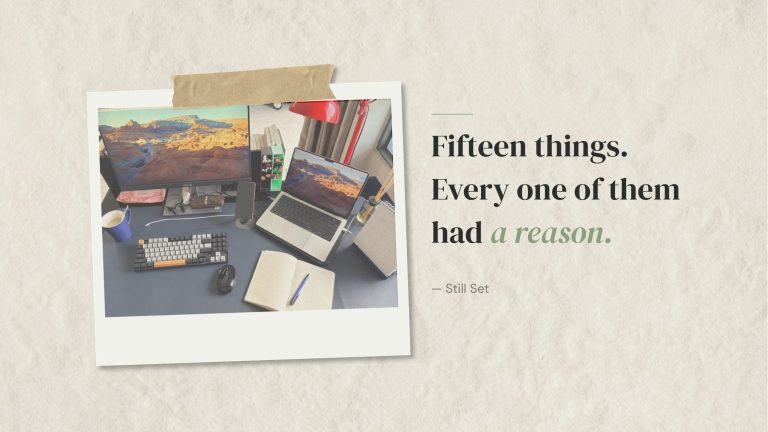
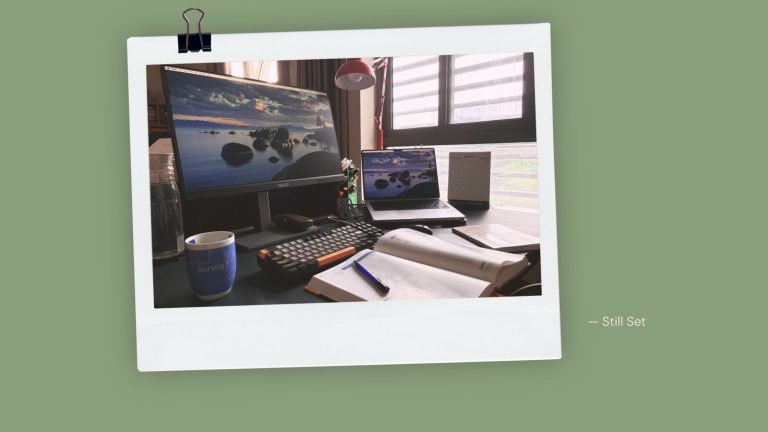
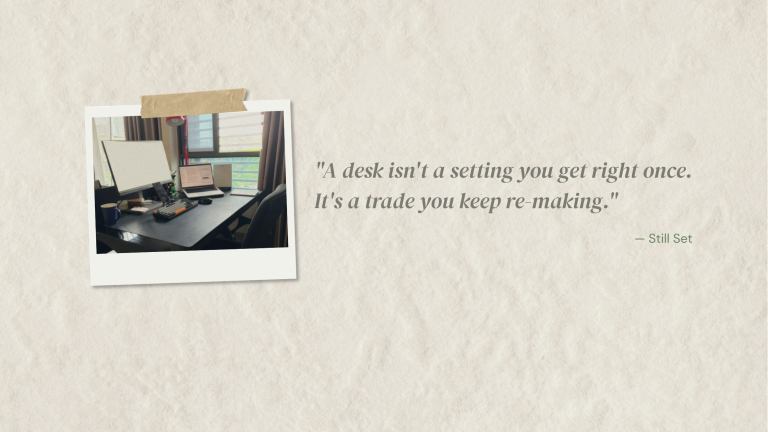
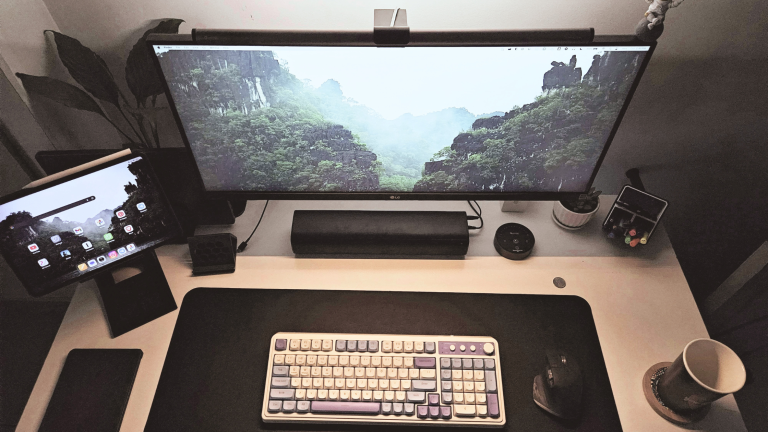
So I cleared my desk. I wrote about that already — about how the hard part was never the tidying, it was making myself decide what to let go of. I got it down to a screen setup, a lamp, a glass of water, a pen holder, and one notebook. It looked great. I felt, briefly, like a person who had their life together.
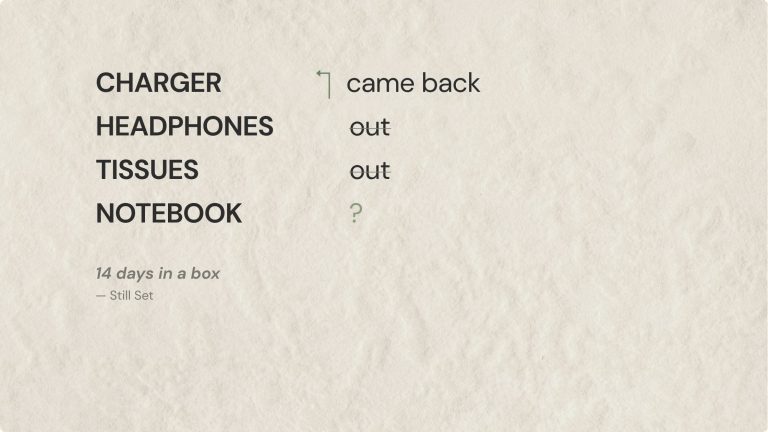
Then about three weeks went by, and I looked up one afternoon and there it was again. A charger I’d brought over to top up my phone. Two receipts. A second pen that wasn’t in the pen holder, just lying there. A sticky note from a call I’d already finished. The desk was quietly turning back into the thing I’d just spent a weekend un-making.
This is the part the desk-clearing advice skips. Almost everything I read tells you how to clear a desk — empty it, sort it, put back only what you use. Good. But nobody tells you what happens on day twenty-two, when the clearing is long done and ordinary life starts depositing stuff on the surface again, one small object at a time. A desk doesn’t get messy in an afternoon. It gets messy the way a beach gets covered in driftwood — a little at a time, while you’re not watching.
I tried the obvious fix first. I told myself I’d do a five-minute tidy at the end of each day, the thing every organizing article recommends. I did it for about four days. Then I had a late call, skipped it, skipped it again, and the pile was back. The five-minute reset assumes you’ll have the energy at the end of the day to deal with a problem you could have just… not created. Most evenings I don’t.
The thing I got wrong about a messy desk
Here’s what finally clicked. The clutter on my desk wasn’t a pile of things I needed to put away. It was a pile of things that had nowhere to be.
The charger had no home — so it lived wherever I last set it down, which was the desk. The second pen had no home, because the pen holder was technically its home but I’d never actually decided that, so it just floated. The receipts had no home at all. None of these things were on the desk because I wanted them there. They were on the desk because the desk is what an object defaults to when it doesn’t have anywhere else to go.
That reframed the whole problem for me. A junk drawer — and a junk desk — isn’t a storage failure. It’s a homelessness problem. The desk becomes the place where homeless objects gather, because flat surfaces are where stuff lands when no one’s decided where it belongs.
The rule that actually held
So I stopped trying to maintain the desk and started doing something smaller: I gave things homes.
Not a system. Not an organizer I bought. Just, one object at a time, a decision: where does this actually live? The charger lives in the desk drawer now — not “near the desk,” not “usually on the desk,” but in the drawer, and it goes back in the drawer when I’m done. Receipts get clipped together and live in their own corner of that same drawer, so they’re not loose on the surface deciding to multiply. The pens all go back to one section of the holder — the same pens, same section, the way a cup goes back in the cupboard. And the books or notebooks I pull down to use go back up on the shelf afterward, instead of stacking on the desk “until I’m done with them,” which somehow never arrives.
The rule, if you want it as a sentence: everything on or near my desk has one fixed home, and anything that drifts out of its home gets put back — not tidied, not sorted, just returned. And the corollary that does most of the work: if something shows up on the desk and I notice it has no home, that’s the signal. I don’t shove it aside. I either give it a home somewhere, or I get rid of it. Those are the only two options. “Leave it on the desk for now” stopped being allowed, because “for now” is exactly how the desk filled up the first time.
The Desk Test
Give it a home, or get rid of it. Deciding which is the hard half.
Two minutes, one object at a time — so the things with no home get sorted now, while it’s still one object and not a pile.
The difference between this and the five-minute tidy is that returning one object to its home takes about three seconds and I can do it without thinking. Tidying a whole pile takes energy and a decision about each thing, which is why I never had it in me at 9pm. This isn’t a chore I do at the end of the day. It’s a reflex I do in the moment, twenty times a day, each one too small to feel like effort.
What it cost
Nothing, again — and I want to be honest that this is becoming a theme on this part of the site, because the changes that have actually held for me haven’t been purchases. The drawer was already there. The shelf was already there. Giving something a home is a decision, not a thing you buy.
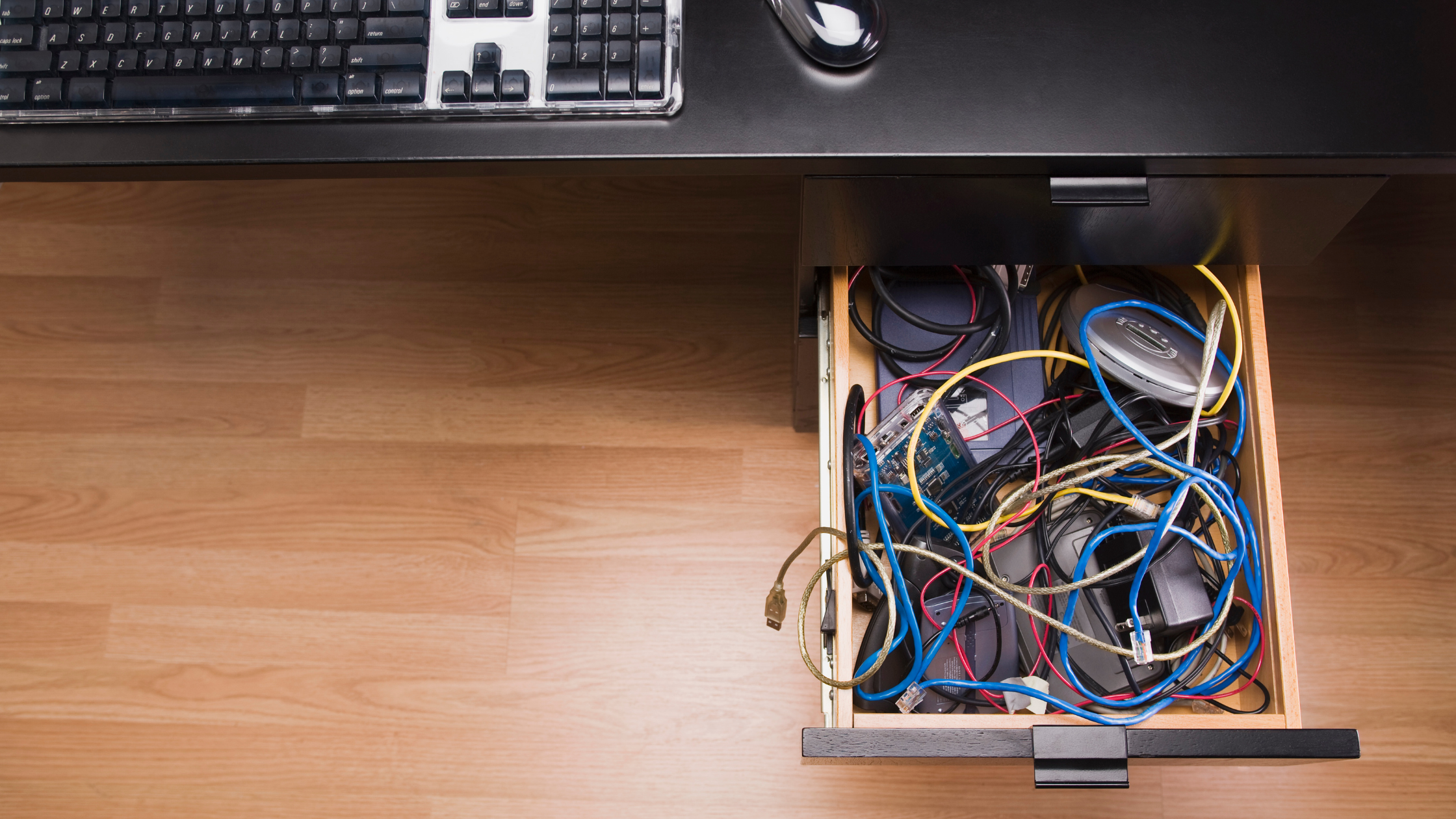
The one place I’d say money is fairly spent — and only if you’ve got the same problem I do — is the inside of that drawer. Mine is the catch-all for the small homeless stuff: a charger, a few cables, and the real culprit, four pairs of earbuds I’ve accumulated over the years — wireless ones, wired ones, all slightly different, none of which I’ll throw out and all of which used to live on the desk — the exact kind of near-identical pile where deciding a number up front beats questioning them one at a time. A simple drawer divider or a small lidded tray gives those things defined slots inside the drawer, so “in the drawer” doesn’t just become a smaller junk pile. I’m not going to pretend a tray is life-changing. It just keeps the homeless objects from turning the drawer into the new version of the desk. (I’ve used a plain divided drawer insert for this; I haven’t tested every version, and the principle — give it a home — matters far more than the specific product.)
The part that stuck
It’s held for a couple of months now, longer than the five-minute-tidy experiment ever did, and I think it’s because I’m not relying on willpower at the end of a tired day. I’m relying on a question I ask in the moment something lands: does this have a home? If yes, it goes there, three seconds, done. If no, I’ve got a homeless object on my hands, and I deal with it now while it’s one object instead of waiting until it’s a pile.
I’m still not a tidy person by nature — this is the same desk that quietly drifted on me for a year. I didn’t become disciplined. I just moved the decision earlier, to the moment the thing arrives, when it’s small and cheap to handle, instead of the moment it’s a pile and I’m exhausted.
This is the second piece I’ve written about the space I actually work in — the rest are here as I add them. Where the desk sits in the room turns out to matter as much as what’s on it — I wrote about which placement rule to break when you can’t follow them all. The desk has since moved three times, which turned out to be a completely separate problem — the rule held through all of them.
Try it on your own desk
What’s actually earning space on your desk?
Two minutes, one question, whatever is in front of you right now. You’ll end up with three lists — keep, go, and the one you couldn’t call either way.
No account, nothing saved, nothing to install.
If your desk does the same slow refill mine did, I’d start with the single object that lands on it most often and has no real home, and just decide where that one thing lives. That’s usually the one quietly doing the most damage. Tell me in the comments what yours is — for me it was, embarrassingly, four pairs of earbuds I keep meaning to whittle down to one.
Want to know what’s actually earning its space on your desk? Take the desk test → Ten minutes, one question.
— Still Set
Some of the links on Still Set may be affiliate links. If you buy through one, I might earn a small commission — at no extra cost to you. I only ever point to things I’d actually use myself, and when I haven’t tested something, I’ll say so plainly.