How to Remember What You Read (When You’ve Given Up on Remembering Everything)
I once owned a whole set of colored highlighters, marked up every book I read, and remembered almost none of it. Half the time, the remembering problem starts earlier — I couldn’t even stay focused on the page long enough to have something worth keeping.
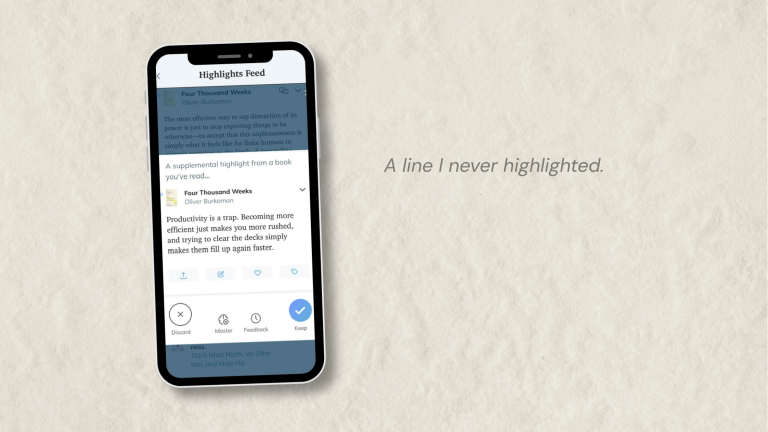
The system was supposed to be foolproof. Highlight the good parts. Copy them into a notes app. Tag them by theme. I’d read that a serious reader does this in about twenty minutes per book, so I did it too. For a while I felt like the kind of person who remembers what they read.
Then one afternoon I went looking for an idea from a book I’d finished a couple of months earlier. I knew I’d marked it. I opened the book — and every other page was a wall of color, more highlighted lines than plain ones. I couldn’t find the idea in the noise. I couldn’t even remember reading it. To review what I’d flagged, I’d have had to reread the entire book. I had turned a book into a coloring project and remembered nothing.
That was the moment I stopped trying to remember everything I read. And strangely, that’s when I started remembering more.
Why you forget most of what you read
Here’s the short answer, and it’s the one nobody selling a system wants to lead with: you forget most of what you read because your brain is doing exactly what it’s built to do. It keeps what it uses and drops what it doesn’t. Reading a page is not “using” an idea. Highlighting it isn’t either. Both feel like effort, so they feel like they should work — but they’re storage, not use.
Psychologist Hermann Ebbinghaus mapped this back in 1885 — his “forgetting curve” showed we lose most new information within days unless we do something with it. And the thing that keeps an idea isn’t collection — piling it up where you can find it later — it’s retrieval, pulling it back out of your head. Highlighting is collection. It feels like the work. It isn’t the work.
And this is true for anyone — but it’s especially true when the head doing the reading also spends all day holding work in it, then comes home to the kids’ schedules, the groceries, the message you forgot to reply to, and is, let’s be honest, at the age where names start arriving a beat late. Asking that brain to also archive everything you read is asking an already-full cup to hold more.
So the problem with “remember everything you read” isn’t that it’s hard. It’s that it points you at the wrong job. You don’t have a collection problem. You have a retrieval problem. And the fix for a retrieval problem is almost always less input handled better, not more input captured faster.
The system that failed me (it might be the one you’re using)
Before the smaller version, here’s the one I dropped — because you might recognize it, and because I want to be fair to it. It isn’t stupid. It just quietly became a second job.
The standard “remember everything” system goes like this: highlight as you read, transcribe your highlights into an app afterward, tag or categorize them, and review them periodically. Every popular version of this is a variation on those four steps.
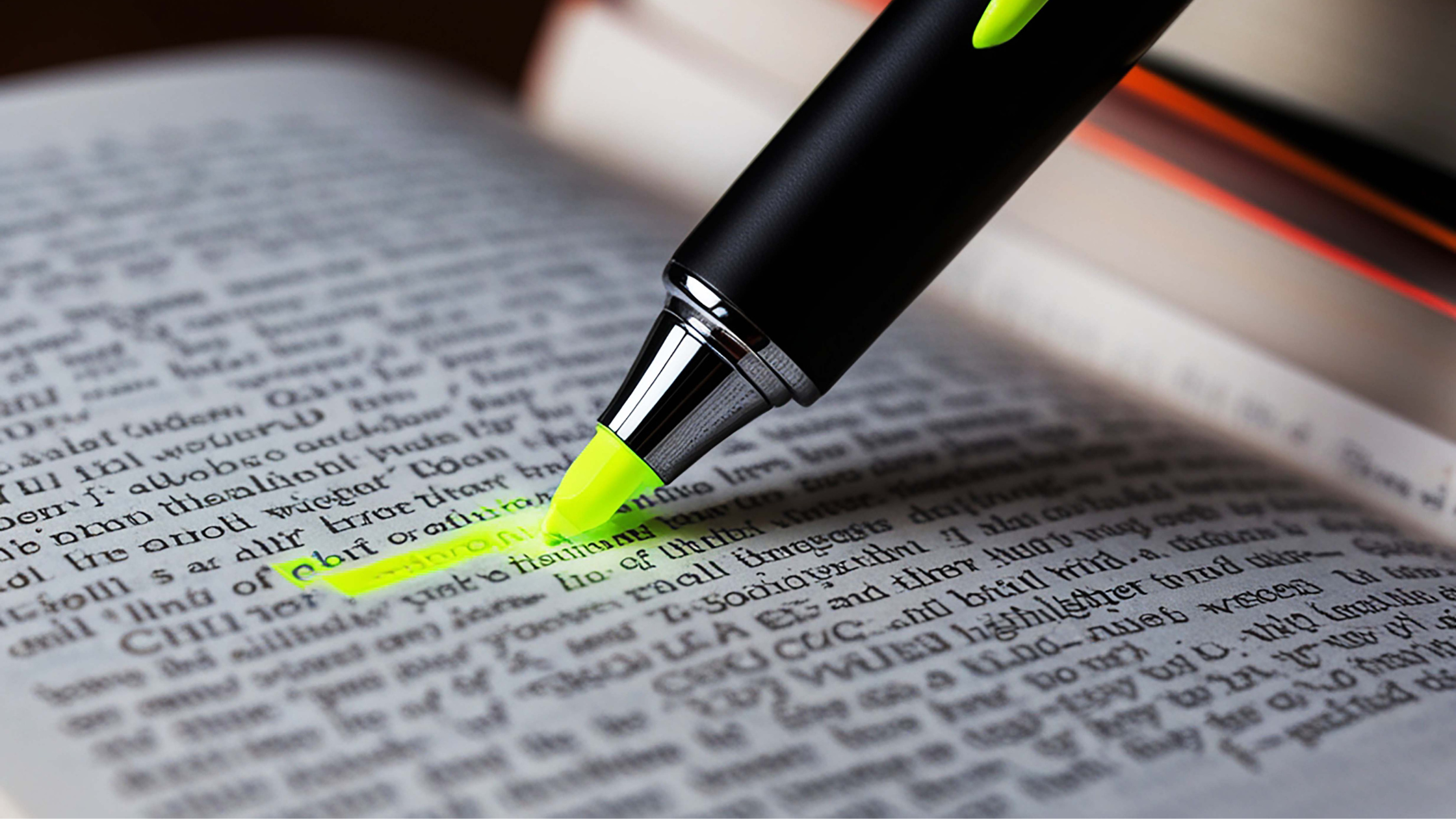
Here’s what actually happened when I ran it. I got genuinely excited — I bought a whole set of highlighters in different colors, because I’m someone who remembers things visually, and I went to town. Any sharp line, any idea that landed, I marked it. And the result? The book ended up looking like a hyperactive student’s notebook, more color than white space. There were more lines I’d flagged to remember than lines I hadn’t. Which meant that to “review my highlights,” I’d basically have to reread the entire book. So I didn’t. I gave up.
The reason it failed isn’t laziness. It’s that the system optimized for capturing more, when the thing I actually needed was to do something with a little. I was collecting harder and retrieving nothing.
What I actually do now
I’ll give you the whole thing in one breath, because it’s small enough to fit in one: when a book gives me something worth keeping, I close it and write one or two sentences about that idea in my own words — not the author’s — and why it mattered to me. That’s it. That’s the system.
No highlighting-then-transcribing. No tags. No archive I’m supposed to revisit. If an idea is worth keeping, it earns a sentence, written now, in my words. If it can’t survive being put in my own words, I probably didn’t understand it well enough to keep anyway — and that’s useful to find out.
Here’s why this small thing does what the big system couldn’t:
Writing it in your own words is retrieval. The second you turn the author’s sentence into yours, you’re pulling the idea back out of your head and rebuilding it. That’s the exact act memory research says moves things from short-term to kept. Copying a highlight skips this. Rewriting from memory is it.
One sentence forces a choice. When you can only keep one line per idea, you have to decide what actually mattered. That decision is most of the value. The old system let me keep everything, which meant I never decided anything — and undecided ideas don’t stick.
It happens now, not “later.” The whole thing takes under a minute, while the book is still open. There’s no future step, no future me who has to show up. The system that survives is the one with no homework attached.
And it doesn’t only work for books. Last week I was watching a video about building an audience — not reading at all — and one line stopped me. Instead of just nodding and scrolling on, I closed the tab and wrote it down in my own words: “Value isn’t always some new thing you have to create. Often it’s already there — you just have to bring it to the right person who needs it. That’s a kind of value too.” One or two sentences. In my words, not the speaker’s. Days later it’s still with me, shaping how I think about my own work — which none of my three hundred color-coded highlights ever managed.
The honest part: what this system doesn’t do
I want to be straight with you, because most articles on this won’t be.
This does not help you remember everything. It’s not designed to. If you need to retain a textbook for an exam, or master technical material for work, this is the wrong tool — you’ll want spaced repetition and real review, which is a different, heavier system for a different job.
It also won’t give you a searchable database of every insight you’ve ever had. I gave that up on purpose. I decided I’d rather keep thirty ideas I actually remember than archive three thousand I never reopen. If having the archive matters to you, keep it — just don’t confuse having it with remembering.
And it’s slower per idea than highlighting. Writing a sentence takes longer than swiping a marker across a line. That’s the cost. The trade is that the slower thing works and the faster thing didn’t, at least not for me.
If you want to start this week
You don’t need to read this whole thing again. Here’s the entire system in three lines:
- Read the way you normally do. Don’t change anything about how you read.
- When an idea stops you, close the book and write one or two sentences — in your own words — about the idea and why it mattered to you.
- Don’t build an archive. Don’t tag it. Don’t promise yourself you’ll review it. The writing was the point; it already worked.
That’s the whole thing. It’s smaller than what you’re doing now, which is exactly why it survives.
I still forget most of what I read. So does everyone, including the people who sell you systems that promise otherwise. But the handful of ideas I decided to keep — the ones that earned a sentence — those I actually have. And a handful I remember beats a thousand I filed away and forgot.
What’s one idea from something you read recently that actually stuck? Reply and tell me — I read every one, and I’m quietly collecting the answers.
— Still Set
Collecting versus using
Highlights you never revisit and objects you never reach for fail the same way. Neither one gets used.
Three lists, two minutes, and a box for the things you can’t decide about. We email you once on day fourteen to tell you what the box proved.
No account, nothing saved, nothing to install.